
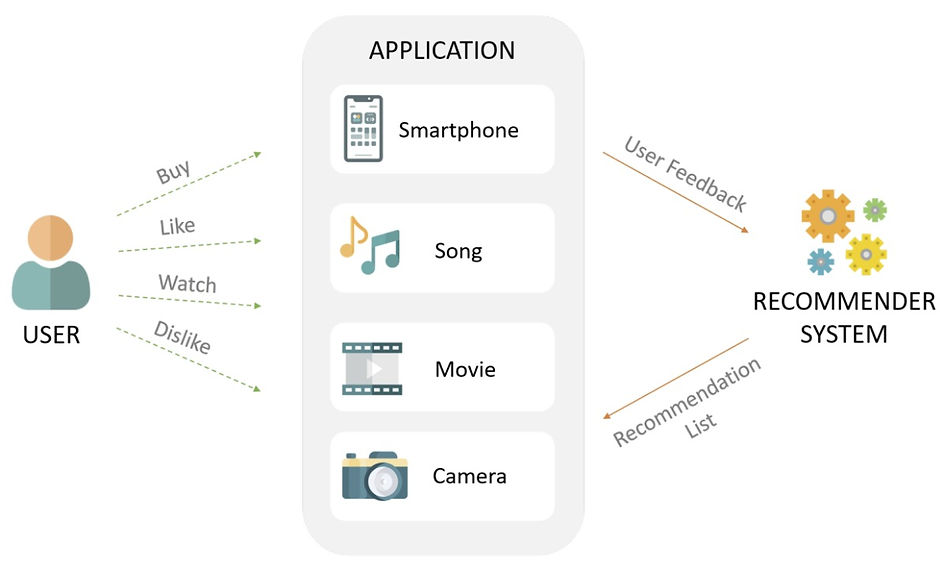
RECOMMENDER SYSTEMS
Recommender systems are a popular type of predictive model. They are used to make recommendations based on user behavior. There are many different algorithmic approaches, data preparation techniques, and model evaluation techniques that are used to create recommender systems. However, if you're just starting out, it's best to ignore these state-of-the-art methods and treat recommender systems as a straightforward classification or regression problem.
The performance of recommender systems depends on a variety of factors. One of these factors is the confidence that users have in their recommendations. The more relevant the recommendation, the better. There are a number of other metrics that can help evaluate the performance of a recommender system. In addition to confidence, users can also evaluate the usefulness of a recommendation.
A recommender system is a decision-making algorithm that can help users navigate through a complex information environment. It can also help users find items based on their interests and preferences. It can augment social processes such as sharing recommendations by providing personalised content and exclusive service recommendations.
Recommender systems can help businesses keep users engaged on their platforms by showing them relevant and exciting new offers that they might be interested in.
One way to measure the efficacy of recommender systems is to conduct online experiments. These experiments can be designed to redirect users to different recommender systems using different parameters and techniques. The experiments can also record interactions between the users and the recommender systems.
Another approach is to use a hybrid recommender. Hybrid recommender systems use a combination of content-based recommendation and collaborative filtering. These systems are deployed widely by Netflix. The content-based system requires users to rate different genres or content, enabling them to make recommendations. The hybrid recommender also has the advantage of allowing for the use of recommendations from both types.
Another technique for building recommendation systems is to use association rules. The purpose of association rules is to associate products with similar qualities. Users tend to purchase complementary products. For instance, a case for a smartphone may be complementary to a case. Using this method, the users' opinions of these two products are averaged and based on the similarities between them.